NEW YORK (AP) — Catapulted by the blockbuster market debut of his rocket company SpaceX, Elon Musk is on track to become the world’s first trillionaire — a milestone once thought unimaginable.
Until now, the trillion-dollar mark was reserved for the GDP of major economies or the valuations of corporate giants. Musk’s new title underscores the accelerating wealth gap: while the richest continue to soar, millions worldwide struggle with everyday expenses.
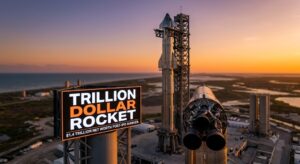

What Does $1 Trillion Look Like?
The sheer scale of one trillion dollars is difficult to grasp:
- Cash distance: One trillion U.S. dollar bills laid end to end would stretch nearly 97 million miles — enough for more than 200 round trips to the moon, and even farther than the 93 million miles between Earth and the sun.
- Global share: Divided among Earth’s 8.2 billion people, each person would receive about $122.
- Economic comparison: South Africa’s GDP is about $480 billion — less than half of Musk’s fortune. Only 21 countries worldwide have economies exceeding $1 trillion.
Buying Power of $1 Trillion
- Housing: At a median U.S. home price of $403,200, Musk’s wealth could purchase nearly 2.5 million houses.
- Fuel: With gas prices averaging $4.11 per gallon, $1 trillion could buy over 243 billion gallons of fuel — far more than the 137 billion gallons Americans consumed last year.
The Historic SpaceX IPO: By the Numbers
The market debut wasn’t just a win for Musk; it shattered global financial records:
-
Record-Breaking Capital: SpaceX debuted on the Nasdaq (under the ticker SPCX), raising nearly $75 billion to $85.7 billion. This completely eclipsed the previous all-time IPO record of $29.4 billion set by Saudi Aramco.
-
The Stock Surge: Shares officially opened at $135 and quickly surged by 19%, closing day one at $160.95 per share, pushing SpaceX’s total corporate valuation past the $2.1 trillion mark.
-
The Trillionaire Leap: Prior to the IPO, Musk’s net worth hovered around $782 billion. The post-debut surge added over $62 billion in a single day, officially making him the world’s first individual with a net worth exceeding $1 trillion. (As of mid-June 2026, market fluctuations have seen his paper wealth scale as high as $1.4 trillion).
Why the Valuation Soared: The Space AI Play
Wall Street’s massive appetite for SpaceX stock wasn’t driven just by rockets. Months prior to going public, Musk strategically wrapped his artificial intelligence startup, xAI, into SpaceX.
-
Data Centers in Orbit: Investors were captivated by SpaceX’s proposal to launch up to 1 million AI data centers into space, utilizing the Starlink satellite constellation.
-
Voting Power: Despite going public, Musk is not selling his own shares and retains more than 82% of the voting power, insulating himself from traditional shareholder pressures.
Historical Comparison: Echoes of Rockefeller
To find a historical precedent for this level of financial dominance, economists point back more than a century:
-
John D. Rockefeller: In 1916, the oil tycoon became the world’s first billionaire. At his peak in 1937, Rockefeller’s fortune accounted for roughly 1.5% of the total U.S. Gross Domestic Product (GDP).
-
The Modern Gap: By comparison, Musk’s new $1.2+ trillion fortune represents roughly 3% of the U.S. GDP. Furthermore, his wealth is now more than four times that of the world’s second-richest person, Alphabet co-founder Larry Page (estimated at $300 billion).
Main Street vs. Wall Street: The Retirement Angle
While the milestone has drawn praise from tech enthusiasts, it has raised alarming concerns among consumer advocacy groups regarding the consolidation of wealth.
The 401(k) Impact: Because of SpaceX’s gargantuan market size, it is being fast-tracked into major index funds. This means millions of everyday Americans will automatically become indirect investors in SpaceX through their retirement plans and 401(k)s—tying the financial stability of ordinary citizens directly to Musk’s space and AI ambitions.